Annual Solar Panel Cleaning Guide: What Homeowners Should Know
Solar panels are designed to operate efficiently with minimal maintenance, but keeping them clean plays an important role in protecting long-term performance. While solar systems don’t require frequent attention, annual or periodic cleaning can help ensure your panels continue producing at optimal levels year after year.
This guide explains when cleaning is necessary, how often it should be done, and what homeowners should know before attempting it themselves.
Do Solar Panels Really Need Cleaning?
In many cases, rain provides enough natural cleaning to keep panels functioning well. However, certain environmental conditions can cause debris to build up over time, reducing the amount of sunlight reaching the panel surface.
Common sources of buildup include:
- Pollen
- Dust and dirt
- Bird droppings
- Leaves and debris
- Pollution residue
Even light accumulation can reduce output if it remains for long periods.
How Often Should Solar Panels Be Cleaned?
For most homeowners, once per year is sufficient. Some homes may benefit from cleaning twice per year depending on location and surroundings.
Annual cleaning is especially helpful if:
- Panels are near trees
- The area experiences heavy pollen seasons
- There has been an extended dry period
- Monitoring data shows reduced output
Checking production trends is often the best way to determine when cleaning is needed.
Best Time of Year to Clean Solar Panels
The ideal time to clean solar panels is typically:
- Spring (after pollen season)
- Early summer
- Fall (after leaves drop)
Avoid cleaning panels during extreme heat or freezing temperatures. Panels should be cool to the touch before any cleaning is performed.
Safe Cleaning Methods for Solar Panels
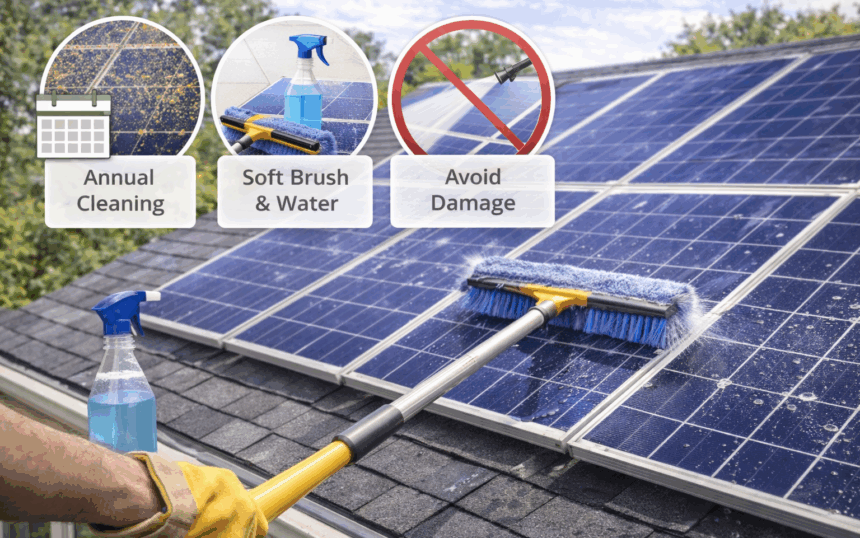
Solar panels should always be cleaned gently to avoid damaging the protective glass or coatings.
Recommended practices include:
- Using clean water
- Soft brushes or microfiber tools
- Low-pressure rinsing
- Avoiding abrasive materials or harsh chemicals
High-pressure washers, stiff brushes, and strong detergents should never be used.
DIY vs. Professional Solar Cleaning
While some homeowners choose to clean panels themselves, professional cleaning services offer several advantages:
- Proper safety equipment
- Roof access expertise
- Specialized tools
- Reduced risk of damage or injury
Professional cleaning is especially recommended for steep roofs or multi-story homes.
How Cleaning Impacts Performance
Clean panels allow maximum sunlight absorption, which can:
- Restore lost efficiency
- Improve daily energy output
- Protect long-term system performance
- Support accurate production monitoring
In many cases, homeowners notice an immediate increase in energy production after cleaning.
What About Snow and Rain?
Snow usually slides off panels naturally due to their angle and smooth surface. Rain helps remove light dirt but may not eliminate heavier buildup like pollen or droppings.
That’s why periodic manual cleaning remains beneficial even in areas with regular rainfall.
Protecting Your Investment
Solar panels are a long-term investment designed to last decades. Simple annual maintenance like cleaning helps preserve that investment and ensures you get the full value of your system.
Clean Panels, Consistent Savings
While solar panels don’t demand constant attention, annual cleaning is a simple step that supports efficiency, reliability, and long-term savings. With proper care, solar systems continue delivering strong performance year after year.