
Net Metering Explained: Everything Homeowners Need to Know
Net metering is one of the most important — and often misunderstood — parts of owning a solar energy system. While solar panels generate electricity during the day, most homes use power around the clock. Net metering bridges that gap by allowing homeowners to earn credits for excess solar energy and use them later.
Understanding how net metering works helps homeowners see why solar savings add up faster than expected.
What Is Net Metering?
Net metering is a billing arrangement between homeowners and their electric utility. When a solar system produces more electricity than a home is using, the excess energy is sent back to the grid.
In return, the utility issues bill credits that offset future electricity usage.
Instead of wasting unused solar energy, homeowners are compensated for it.
How Net Metering Works Day to Day
During sunny daytime hours:
- Solar panels power your home first
- Excess energy flows to the grid
- Credits are recorded on your account
At night or during cloudy periods:
- Your home pulls electricity from the grid
- Previously earned credits reduce or eliminate charges
The result is a balanced energy system that works seamlessly without homeowners needing to manage it manually.
Monthly vs. Annual Net Metering
One common misconception is that net metering balances energy usage daily or monthly. In reality, most programs track production and usage over a longer billing cycle.
This matters because:
- Summer overproduction can offset winter usage
- Seasonal changes balance out over time
- Solar systems don’t need to produce the same amount every month
Annual net metering makes solar far more practical and cost-effective.
Why Net Metering Reduces Bills So Effectively
Net metering improves solar savings by:
- Maximizing the value of excess solar energy
- Reducing reliance on peak-rate electricity
- Stabilizing energy costs throughout the year
Instead of losing unused production, homeowners receive full value for every kilowatt-hour generated.
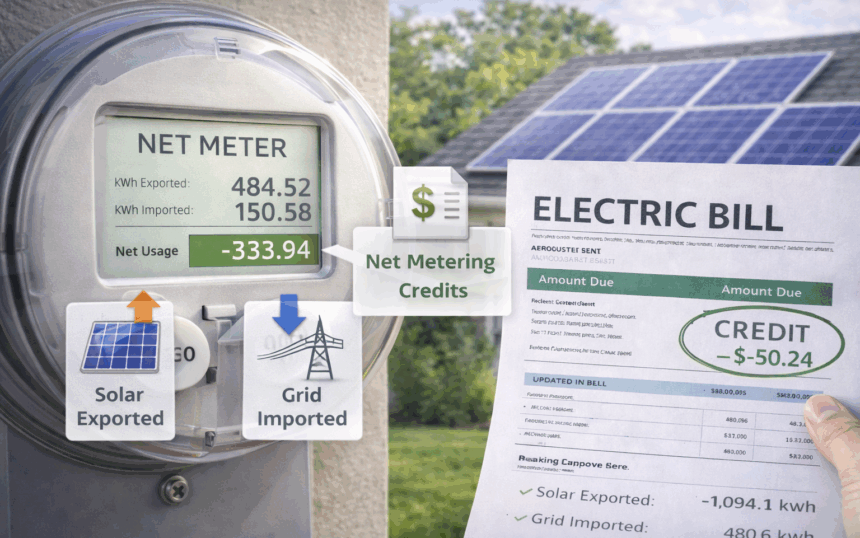
What Appears on a Net Metering Bill?
After going solar, electric bills often include:
- Total energy used from the grid
- Total energy exported to the grid
- Net energy usage
- Remaining credits (if applicable)
- Basic utility service charges
Many homeowners are surprised to see bills near zero for much of the year.
Net Metering vs. Battery Storage
Net metering and battery storage serve different purposes:
- Net metering offsets energy costs financially
- Batteries provide backup power during outages
Some homeowners choose one, while others combine both for maximum flexibility and resilience.
Does Net Metering Ever Change?
Utility policies can evolve over time, which is why installing solar sooner rather than later is often beneficial. Locking in net metering early can protect homeowners from future policy adjustments and preserve long-term savings.
Why Net Metering Is Critical to Solar ROI
Without net metering, solar systems would be far less cost-effective. Net metering ensures homeowners receive fair value for their energy production, accelerating payback and increasing lifetime savings.
Net Metering Turns Solar Into a Year-Round Asset
By converting excess solar energy into bill credits, net metering allows homeowners to benefit from solar even when the sun isn’t shining. It’s a core reason solar remains one of the smartest long-term energy investments available.