How to Maintain Your Solar Panels: A Homeowner’s Guide
One of the biggest advantages of solar energy is how low-maintenance it is compared to other home systems. Solar panels are designed to operate reliably for decades with minimal upkeep. That said, basic maintenance plays an important role in protecting performance, efficiency, and long-term savings.
Understanding how to care for your solar panels helps ensure your system continues delivering maximum value year after year.
Do Solar Panels Require Regular Maintenance?
Solar panels have no moving parts, which means there’s very little that can mechanically fail. Most systems require far less maintenance than HVAC systems, generators, or traditional energy equipment.
For most homeowners, maintenance involves:
- Periodic visual inspections
- Occasional cleaning
- Monitoring system performance
When properly installed, solar panels are built to withstand years of weather exposure without issue.
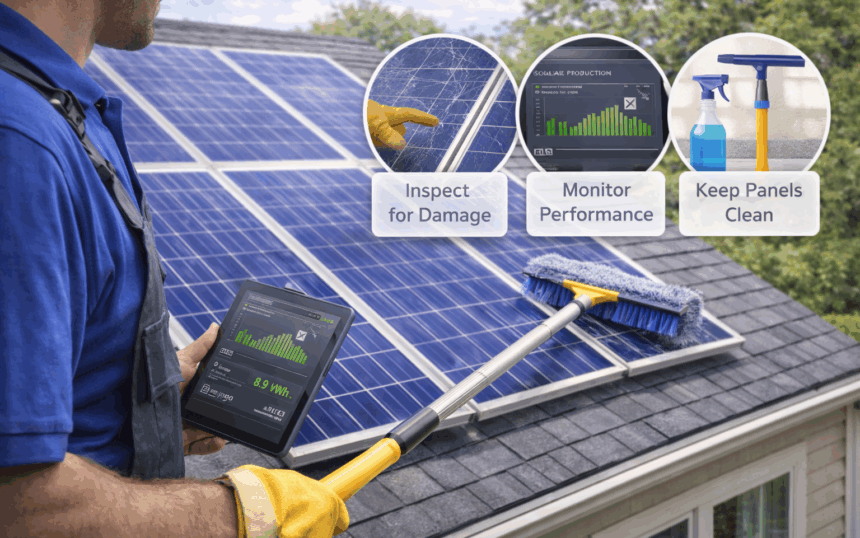
Keeping Panels Clean
Dirt, dust, pollen, bird droppings, and debris can accumulate on solar panels over time. While rain often washes away light buildup, heavier accumulation can slightly reduce output if left untreated.
In most cases:
- Light rain provides natural cleaning
- Annual or biannual cleaning is sufficient
- Cleaning is especially helpful after pollen season or prolonged dry periods
Panels should always be cleaned gently using water and soft materials to avoid scratching the surface.
Monitoring System Performance
Most modern solar systems include monitoring software that tracks daily energy production. Homeowners can quickly spot performance issues by reviewing output trends.
Signs that maintenance may be needed include:
- Sudden drops in energy production
- System alerts or error messages
- Inverter warnings
Monitoring allows issues to be addressed early before they impact savings.
Inspecting for Physical Damage
Although solar panels are extremely durable, it’s good practice to visually inspect the system occasionally — especially after severe weather.
Look for:
- Cracked glass
- Loose wiring
- Damaged mounting hardware
- Obstructions caused by fallen branches or debris
Any visible damage should be evaluated by a professional installer.
Inverter & Electrical Components
Inverters typically require more attention than panels themselves. While panels often last 25–30+ years, inverters may need servicing or replacement sooner depending on type.
Routine checks ensure:
- Proper energy conversion
- Safe electrical operation
- Accurate system monitoring
When to Call a Professional
Homeowners should avoid climbing on roofs or handling electrical components themselves. Professional solar maintenance services are recommended for:
- Deep cleaning
- Electrical inspections
- Performance diagnostics
- Warranty-related issues
Professional servicing ensures safety and protects system warranties.
How Maintenance Protects Long-Term Savings
Even small efficiency losses can impact long-term savings if left unaddressed. Regular maintenance helps:
- Preserve peak energy output
- Prevent long-term degradation
- Extend system lifespan
- Protect return on investment
Well-maintained systems consistently outperform neglected ones over time.
Solar Maintenance Is Simple but Valuable
Solar panels don’t demand constant attention, but basic care goes a long way. With light cleaning, occasional inspections, and performance monitoring, homeowners can expect reliable energy production for decades.