
How Long Does Solar Pay for Itself? A Homeowner ROI Breakdown
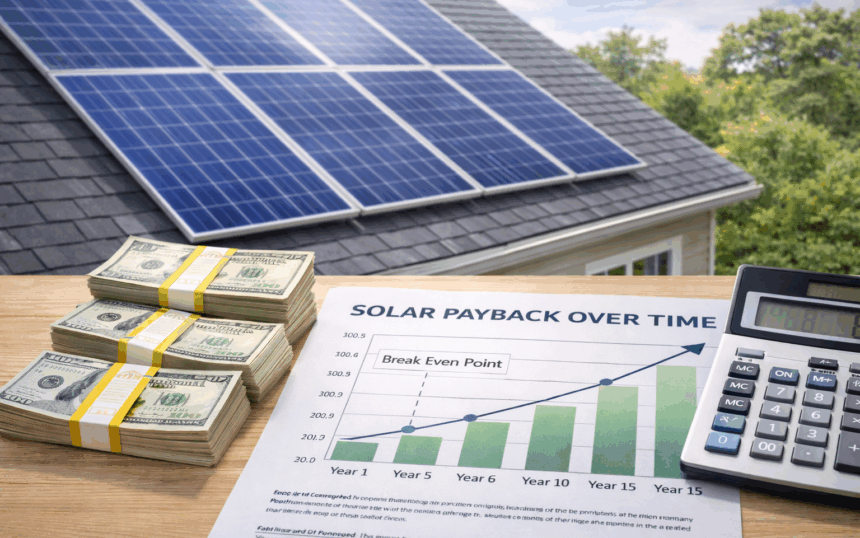
One of the most important questions homeowners ask before installing solar panels is how long it will take for the system to pay for itself. This concept, known as solar payback period, helps determine whether solar is a smart financial investment.
While the exact timeline varies from home to home, most homeowners see solar pay for itself far sooner than expected — followed by decades of ongoing savings.
What Does “Payback Period” Mean?
The payback period is the amount of time it takes for the savings generated by your solar system to equal the total cost of installation.
Once your system reaches payback:
- Electricity savings exceed the initial investment
- Your system begins generating net financial gain
- Future energy costs are significantly reduced or eliminated
Everything after payback is effectively profit in the form of avoided utility bills.
Average Solar Payback Timeline
For most homeowners, solar systems pay for themselves in 6 to 10 years. Several factors influence where a home falls within that range.
Homes with higher electricity usage, strong solar exposure, and favorable incentives often experience faster payback — sometimes in as little as 5–7 years.
Given that solar panels typically last 25–30 years or more, the majority of the system’s lifespan delivers long-term savings.
Key Factors That Affect Solar ROI
System Cost After Incentives
Federal tax credits, state incentives, and utility programs dramatically reduce upfront cost. Lower net system costs shorten payback timelines.
Electricity Rates
Higher utility rates mean greater monthly savings from solar, accelerating return on investment. As rates rise over time, solar ROI improves even faster.
System Size & Efficiency
Well-designed systems that closely match household energy usage maximize savings without unnecessary overspending.
Financing Method
Cash purchases typically yield the fastest payback. Loans may slightly extend payback but still deliver strong long-term savings. Leases and PPAs prioritize immediate bill reduction rather than ownership ROI.
Solar ROI vs. Traditional Investments
Solar often outperforms many traditional investments because:
- Savings are predictable
- Returns are not tied to market volatility
- Energy savings increase as utility rates rise
When viewed as a long-term asset, solar provides a stable and reliable return.
Additional Financial Benefits Beyond Payback
Solar ROI isn’t just about monthly savings. Homeowners also benefit from:
- Increased property value
- Reduced exposure to energy inflation
- Long-term price certainty
- Potential resale advantages
Many buyers value homes with solar because of lower operating costs.
What Happens After Payback?
Once your system pays for itself:
- Electricity costs drop dramatically
- Utility bills may be limited to minimal service fees
- Annual savings accumulate year after year
Over the life of the system, many homeowners save tens of thousands of dollars.
Why ROI Calculations Should Be Personalized
Online calculators provide estimates, but true ROI depends on:
- Your actual energy usage
- Roof layout and orientation
- Incentive eligibility
- Future energy plans (EVs, electrification)
A personalized solar evaluation provides the most accurate payback timeline.
Solar Is a Long-Term Financial Win
For homeowners planning to stay in their home long-term, solar delivers one of the strongest returns available. With incentives, rising utility rates, and durable technology, solar payback continues to improve year after year.