
Best Time of Year to Install Solar Panels: A Homeowner’s Guide
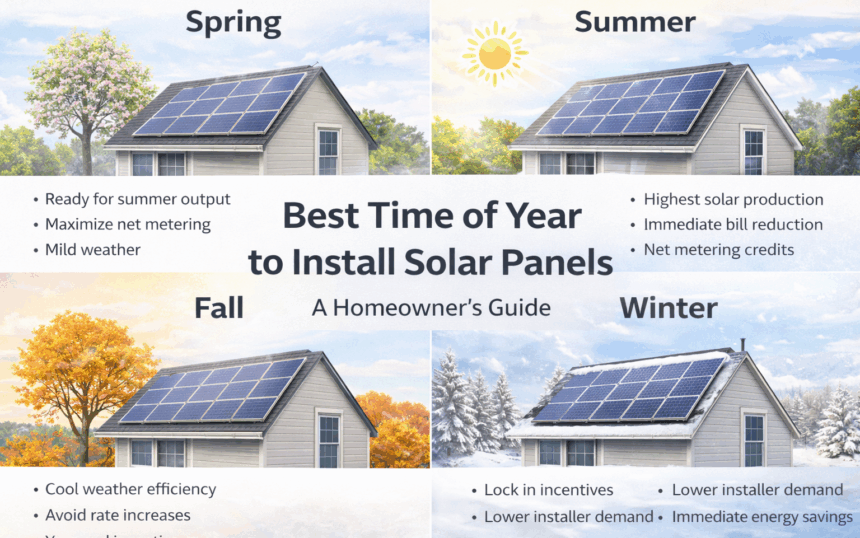
One of the most common questions homeowners ask when planning a solar installation is whether there’s a “best” time of year to do it. The short answer is that solar can be installed year-round, but certain seasons offer unique advantages depending on your goals, timeline, and energy usage.
Understanding how timing affects installation, savings, and system performance helps homeowners make confident decisions.
Can Solar Be Installed Year-Round?
Yes — modern solar systems can be installed during any season. Panels, mounting hardware, and electrical components are designed to handle a wide range of weather conditions, and experienced installers work year-round.
That said, timing can influence:
- Installation scheduling
- Speed of activation
- How quickly savings begin
- Incentive availability
Spring: A Popular Time to Go Solar
Spring is one of the most popular seasons for solar installations.
Benefits of Spring Installation
- Mild weather supports smooth installation
- Systems are ready before peak summer production
- Homeowners begin earning credits during high-sun months
- Faster accumulation of savings
Installing in spring allows homeowners to maximize summer solar output, often leading to strong first-year performance.
Summer: Maximum Production, High Demand
Summer delivers the highest solar production due to longer daylight hours and stronger sunlight.
Pros of Summer Installation
- Immediate high energy generation
- Quick reduction in electric bills
- Strong net metering credit accumulation
Considerations
- Higher installer demand may affect scheduling
- Extreme heat can slightly slow installation timelines
Even so, summer installations still deliver excellent financial results.
Fall: Strategic Timing for Long-Term Savings
Fall is often overlooked, but it can be an excellent time to install solar.
Why Fall Works Well
- Cooler temperatures improve installation efficiency
- Installer availability may be greater
- Systems are operational before winter rate increases
- Incentives are often still available before year-end
Installing in fall positions homeowners to benefit from solar before the next summer cycle.
Winter: Still a Smart Option
While winter has shorter days, solar installation is still effective during colder months.
Winter Installation Benefits
- Faster scheduling availability
- Lower installer demand
- Systems begin generating power immediately
- Locking in incentives before potential changes
Cold temperatures do not reduce solar efficiency, and panels begin producing energy as soon as they’re activated.
Incentives Matter More Than Seasons
One of the most important factors in timing solar installation is incentive availability. Tax credits, rebates, and utility programs can change over time.
Installing sooner allows homeowners to:
- Secure current incentives
- Protect against future reductions
- Start saving earlier
Waiting too long can result in missed financial opportunities.
When Is the “Best” Time Overall?
The best time to install solar is often as soon as you’re ready. Every month without solar is a month of higher utility bills and lost savings.
From a financial perspective, earlier installation means:
- Faster return on investment
- More lifetime savings
- Greater protection from rising energy costs
Timing Solar for Your Home
Every homeowner’s situation is different. Roof readiness, financing, future energy plans, and lifestyle factors all play a role in determining the ideal installation window.
A personalized evaluation helps identify the best timing for your specific goals.
Start Saving Sooner, Not Later
While some seasons offer small advantages, solar delivers value year-round. The most important factor isn’t the month you install — it’s how long you benefit from clean, predictable energy afterward.